Articole publicate in Science
March 25: A penumbral eclipse will be visible across much of the Western and Eastern Hemispheres.
Published by By Katrina Miller in Science
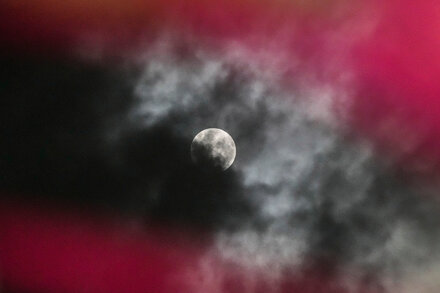
March 25: A penumbral eclipse will be visible across much of the Western and Eastern Hemispheres.
April 21: Comet Pons-Brooks makes its closest approach to the sun.
Sept. 17-18: A partial lunar eclipse will be visible in the Western Hemisphere.
Oct. 12-13: A newly discovered comet makes its closest approach to Earth.
Morning Person? You Might Have Neanderthal Genes to Thank.
Hundreds of genetic variants carried by Neanderthals and Denisovans are shared by people who like to get up early.
publicat de By Carl ZimmerExactly How Much Life Is on Earth?
According to a new study, living cells outnumber stars in the universe, highlighting the deep, underrated link between geophysics and biology.
publicat de By Dennis OverbyeWatch ‘Sea Fireflies’ Make Underwater Fireworks as They Seek Mates
Tiny crustaceans the size of sand grains sneeze up packets of glowing mucus to impress potential partners.
publicat de By Elizabeth AnneCould a Drug Give Your Pet More Dog Years?
Longevity drugs for our canine companions are moving closer to reality. They also raise questions about what it might mean to succeed.
publicat de By Emily AnthesWhy Warblers Flock to Wealthier Neighborhoods
In the unequal distribution of birds and other species, ecologists are tracing the impact of bigoted urban policies adopted decades ago.
publicat de By Hillary RosnerA Giant Leap for the Leap Second. Is Humankind Ready?
A top scientist has proposed a new way to reconcile the two different ways that our clocks keep time. Meet — wait for it — the leap minute.
publicat de By Matt RichtelFruit Flies Are Invading Los Angeles. The Solution? More Fruit Flies.
The Mediterranean fruit fly lays eggs that hatch into maggots inside fruit. Officials plan to halt population growth by dropping millions of sterile male flies over the affected region.
publicat de By Livia Albeck-ripkaNow Showing, an Ancient Spell Book for the Dead
An exhibition at the Getty Museum reveals the Egyptian Book of the Dead, long relegated to a dark vault, in the light of day.
publicat de By Franz Lidz6 Great Space Images in October
An eclipse's shadow from space, India's astronaut capsule and a confused space telescope.
publicat de By Michael RostonThese Amphibians Have a Taste for Their Mom’s Skin
Caecilians are the first amphibians known to pass on their microbiomes to their offspring.
publicat de By Sofia QuagliaInside a High-Security Virus Lab
High-security labs, like this one at Penn State, are at the center of a debate over research that alters viruses to make them more dangerous.
publicat de By Benjamin MuellerDeep in the Amazon, some towns had better eclipse fortune than others.
On a beach in Brazil, a shadowy path of wonder reaches its conclusion.
Your Next Eclipse Isn’t That Far Off, and It Could Be Even Better
Saturday’s eclipse will be followed by another in April that will cross the other end of the United States.
publicat de By Michael RostonA Solar Eclipse Shines Light on Traditions That Still Matter Today
Among Indigenous peoples of the Americas, from Navajo Nation down to the rainforests of Brazil, events like the annular eclipse on Saturday have important and distinctive cultural meanings.
publicat de By Katrina MillerWhy the “Mother of the Atomic Bomb” Never Won a Nobel Prize
Lise Meitner developed the theory of nuclear fission, the process that enabled the atomic bomb. But her identity — Jewish and a woman — barred her from sharing credit for the discovery, newly translated letters show.
publicat de By Katrina MillerEvelyn Fox Keller, Who Turned a Feminist Lens on Science, Dies at 87
Trained as a physicist and biologist, she argued that science had become gendered, with a narrow masculine framework that distorted inquiry.
publicat de By Clay RisenTo Knock an Elephant Off Balance, Bring Out a Giant Blindfold
Elephants rely on visual cues to maintain consistent timing of their strides, a new study suggests.
publicat de By Emily AnthesIn Peru, a Fossil-Rich Desert Faces Unruly Development
The Ocucaje Desert, where paleontologists recently unearthed the ancient skeleton of the world’s heaviest animal, is being overtaken by human settlement.
publicat de By Mitra TajAn Ancient Whale Named for King Tut, but Moby-Dinky in Size
Paleontologists in Egypt announced the discovery of Tutcetus rayanensis, an eight-foot-long leviathan that lived 41 million years ago.
publicat de By Franz LidzHow to Watch NASA Bring Asteroid Samples Home From Space
A seven-year mission might end on Sunday as scientists try to drop off a sample of rock from Bennu, an asteroid that might hold clues about the origins of our solar system and life.
publicat de By Katrina MillerIndia’s Moon Lander Misses Wake-Up Call After Successful Mission
The Chandrayaan-3 mission did what it set out to do, but its lander and rover could not be roused after entering the cold lunar darkness two weeks ago.
publicat de By Kenneth ChangThis Tiny Parasitic Wasp Can Drill Through Plastic
In experiments under his microscope at home, a teenage researcher discovered a very unusual talent in a species of tiny insect that usually lays eggs on the inside of a tough plant growth.
publicat de By Darren IncorvaiaA Vanishing Nomadic Clan, With a Songlike Language All Their Own
New genetic research confirms the oral history of a small group of nomadic people living in Indonesia’s rainforest.
publicat de By Brendan BorrellNorthern Lights Shine in Midwestern Skies
The colorful display from Aurora Borealis was visible from parts of the U.S.
publicat de By Storyful AndWhat We Know About Children and Opioids
A 1-year-old died and three other children fell ill at a New York day care, and the authorities blamed opioids. Children are significantly more vulnerable to drugs because of their small bodies.
publicat de By Benjamin MuellerSome Whales May Have Been Wiped Out by Medieval Europeans
A study of hundreds of specimens from European archaeological digs found two species of whales that are no longer present in the continent’s waters.
publicat de By Kate GolembiewskiNASA Announces New Job: U.F.O. Research Director
The role was created in response to the recommendations of a report that found the agency could do more to collect and interpret data on unidentified anomalous phenomena.
publicat de By Kenneth Chang